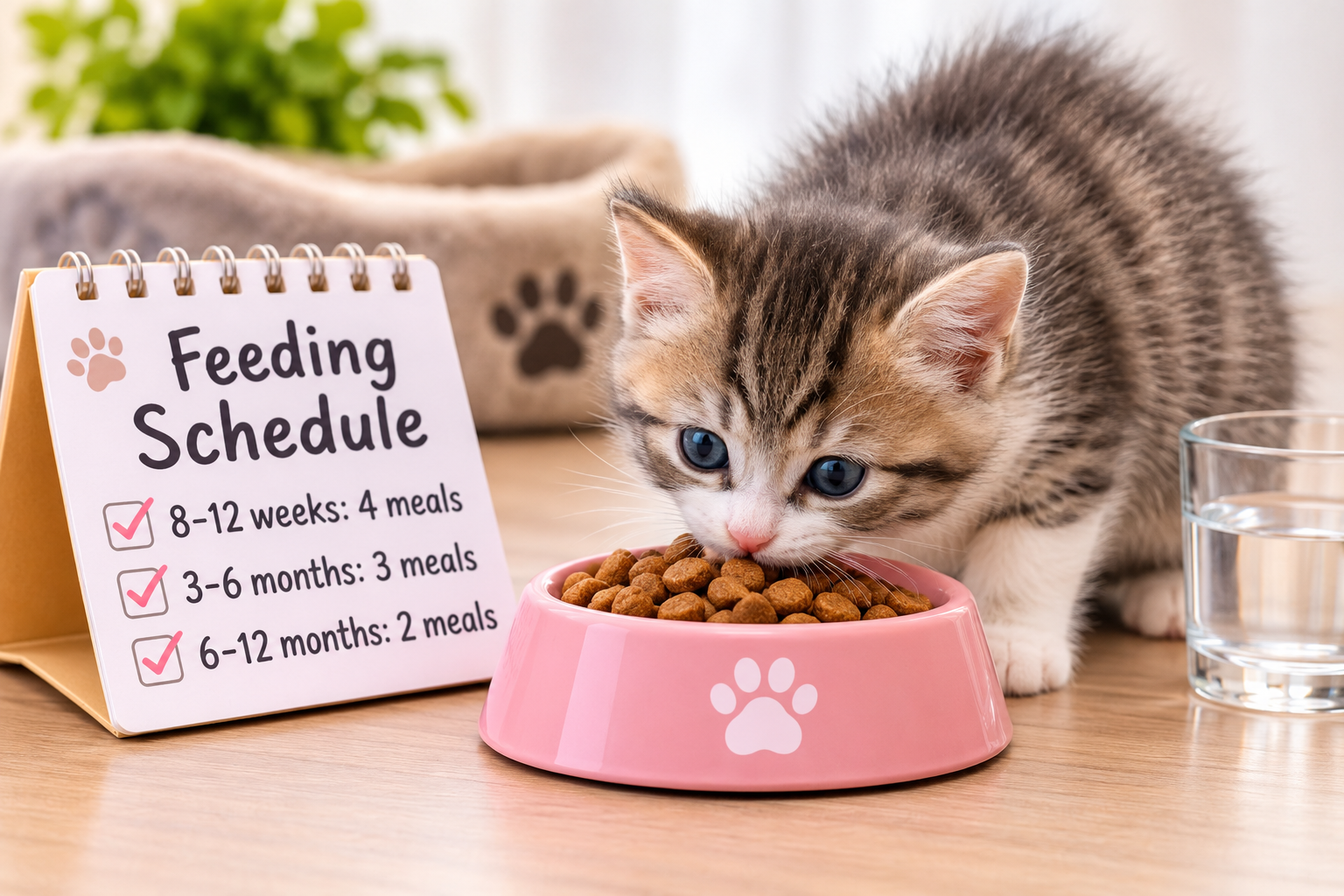




How Many Times a Day Should You Feed a Kitten? Feeding Schedule by Age
If you have a young kitten at home, one of the first questions you may ask is: How many times a day should you feed a kitten? Is it better to offer several small meals or just two larger meals?
The answer depends on your kitten's age and stage of development. Kittens grow quickly and need plenty of energy and essential nutrients, but their small stomachs cannot comfortably handle large meals at once.
In general, weaned kittens between 6 and 12 weeks old need around four meals a day. Feeding frequency gradually decreases as they grow older.
In this guide from Super Pet, we'll explain how often to feed kittens at different ages, how to determine the right food portions, and how to choose suitable food for healthy growth.
How Many Times a Day Should You Feed a Kitten by Age?
A kitten's feeding schedule changes as it grows. Here is a general guide for kittens that have started eating solid food:
- 6–12 weeks: Around 4 small meals a day. Kittens at this stage are growing rapidly and have small stomachs.
- 3–6 months: Around 3 meals a day, with the daily food allowance divided between meals.
- 6–12 months: Usually 2 meals a day, although some kittens may benefit from 3 meals depending on their activity and individual needs.
These recommendations are general guidelines. The appropriate schedule may vary depending on your kitten's weight, food type, calorie intake, and health condition.
Important: More meals do not mean more total food. The goal is to divide your kitten's appropriate daily food allowance into suitable portions.
How Often Do Newborn Kittens Need to Eat?
Newborn kittens have very different feeding requirements from kittens that eat solid food.
During their first weeks of life, kittens depend on their mother's milk and need to nurse frequently. If a kitten is orphaned or cannot nurse, it needs a specially formulated kitten milk replacer.
The number of feedings and the amount of milk depend on the kitten's age, weight, and health. Follow your veterinarian's instructions for an appropriate feeding schedule.
Around four weeks of age, kittens may gradually begin the weaning process. This involves introducing soft, easy-to-eat kitten food while milk feeding continues during the transition, depending on the kitten's needs.
Important: Cow's milk is not a suitable replacement for mother's milk or kitten milk replacer. It may cause digestive upset and diarrhea.
Why Do Kittens Need Frequent Meals?
There are three main reasons kittens benefit from smaller, more frequent meals.
1. Small Stomachs
Young kittens cannot comfortably eat large quantities at once. Dividing their daily food into smaller portions helps them meet their nutritional needs throughout the day.
2. High Energy Requirements
Growth requires energy, protein, and essential nutrients to support muscle development, healthy bones, and overall body development.
3. Rapid Growth
Kittens gain weight and develop quickly during their first months of life. That is why they need complete and balanced food specifically formulated for growth.
What Is the Best Food for Kittens?
Choose food labeled Kitten or specifically formulated for growth. It should be complete and balanced to meet the nutritional needs of growing kittens.
Available options include:
- Dry Kitten Food: Dry food formulated for growing kittens. It is convenient to serve and measure.
- Wet Kitten Food: Wet food designed for kittens, with a higher moisture content.
- Mixed Feeding: A combination of wet and dry kitten food, provided the total daily amount is calculated correctly.
The most important factor is choosing food that meets your kitten's growth requirements, not simply a product your kitten enjoys eating.
Can You Mix Wet and Dry Food for Kittens?
Yes. You can combine wet and dry kitten food. This approach is often called mixed feeding.
Wet food can help increase water intake, while dry food is convenient to serve and store according to the manufacturer's instructions.
However, you should calculate the total daily amount of both foods to make sure your kitten gets the right number of calories without being overfed.
Always provide fresh drinking water and clean food and water bowls regularly.
How Much Food Should a Kitten Eat?
The right amount of food depends on more than age. Several factors influence your kitten's daily nutritional needs:
- Current body weight.
- Age and growth stage.
- Activity level.
- Food type and calorie content.
- Overall health.
Start with the feeding recommendations on the product packaging, which usually provide guidance based on weight and age.
Then monitor your kitten's weight, body condition, and growth regularly. If your kitten is not gaining weight as expected, is losing weight, or has a poor appetite, consult your veterinarian.
Common Mistakes When Feeding Kittens
Some feeding mistakes can affect a kitten's nutrition and healthy development. Common examples include:
- Feeding adult cat food instead of food formulated for growth.
- Offering too much food in one meal.
- Changing food suddenly without a gradual transition.
- Giving cow's milk instead of mother's milk or kitten milk replacer.
- Not providing fresh drinking water.
- Leaving wet food out for too long.
- Failing to monitor weight and growth.
- Giving nutritional supplements without veterinary advice.
Important: Complete and balanced kitten food is formulated to provide essential nutrients. Do not add supplements randomly unless your veterinarian recommends them.
Can You Leave Dry Food Out for Kittens All Day?
Some kittens can manage a free-feeding routine, but this approach does not work for every cat.
It is generally better to measure the recommended daily amount and monitor how much your kitten eats. Leaving unlimited food available may lead to overeating and unhealthy weight gain.
If you prefer scheduled meals, divide the daily food allowance into portions appropriate for your kitten's age.
Wet food should not be left at room temperature for extended periods. Store leftovers and discard uneaten food according to the product's storage instructions.
When Should You Switch Your Kitten to Adult Cat Food?
Most cats transition from Kitten Food to Adult Cat Food at around 12 months of age. However, the timing may vary depending on breed, growth rate, and health condition.
The transition should be gradual over several days. Mix increasing amounts of the new food with the old food to reduce the risk of digestive upset.
If your kitten belongs to a large breed or has a specific health condition, ask your veterinarian when to make the change.
Frequently Asked Questions About Kitten Feeding
Can a Young Kitten Eat Only Two Meals a Day?
It depends on the kitten's age. Young weaned kittens, especially those between 6 and 12 weeks old, generally need around four meals a day. Feeding frequency can gradually decrease as they grow.
Can Kittens Eat Adult Cat Food?
Kitten food is preferable during the growth stage because young cats have different energy and nutritional requirements from adult cats.
Is Wet Food Better Than Dry Food for Kittens?
Both can be suitable options. You can feed either type or combine them, as long as the food is complete, balanced, and formulated for growth.
Can Kittens Drink Cow's Milk?
Cow's milk is not recommended because many cats have difficulty digesting lactose, which may cause diarrhea and digestive upset. Orphaned kittens need a specially formulated kitten milk replacer.
What Should I Do If My Kitten Is Not Eating Well?
A poor appetite in a kitten should be taken seriously, especially if accompanied by lethargy, vomiting, diarrhea, or weight loss. Consult a veterinarian to identify the cause, as young kittens can be affected quickly by inadequate nutrition.
When Should I Stop Feeding Kitten Food and Start Adult Food?
Most cats transition at around 12 months of age, although the timing may vary depending on breed, growth, and health. Food should be changed gradually.
Conclusion
The number of meals a kitten needs changes with age and growth stage. Weaned kittens between 6 and 12 weeks generally need around four meals a day, with feeding frequency gradually decreasing as they grow older.
Choose complete and balanced Kitten Food, divide the daily allowance into suitable meals, monitor your kitten's weight and growth, and provide fresh drinking water at all times.
If you notice a poor appetite, unexpected weight changes, or signs of illness, consult your veterinarian.
Super Pet – Because proper nutrition from the beginning helps your kitten build a healthier life.