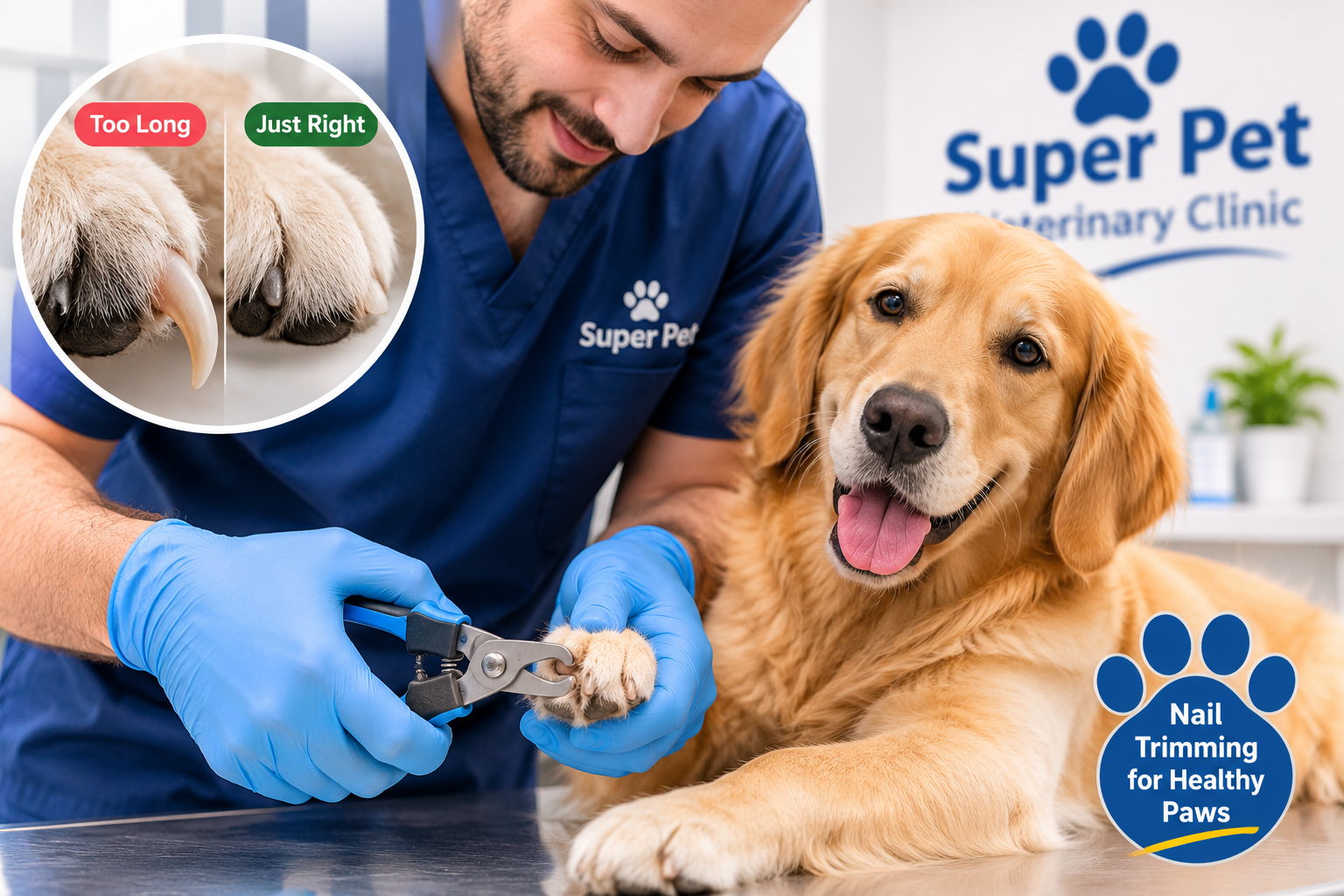




How to Tell If Your Dog's Nails Are Too Long: 5 Signs, Trimming Tips & When to Seek Help
How to Tell If Your Dog's Nails Are Too Long: 5 Signs, Trimming Tips & When to Seek Help
Have you noticed your dog's nails clicking against the floor while walking? Do they look unusually long, or does your dog seem uncomfortable when standing or moving?
Overgrown dog nails are more than a cosmetic issue. They can cause discomfort, affect the way your dog walks, and, in severe cases, curl into the paw pads and cause painful wounds or infections.
Regular dog nail trimming helps maintain healthy paws and comfortable movement. But how can you tell when your dog's nails need trimming, and how often should you cut them?
In this guide from Super Pet, we'll explain the five main signs of overgrown dog nails, how to trim them safely, and when professional veterinary assistance is recommended.
How Do You Know If Your Dog's Nails Are Too Long?
Your dog's nails may need trimming if they click against hard floors, touch the ground noticeably while standing, or begin to curl toward the paw pads. However, nail length should be assessed alongside your dog's posture, comfort, and walking pattern.
5 Signs Your Dog's Nails Need Trimming
1. You Hear Clicking Sounds While Your Dog Walks
One of the most noticeable signs of long dog nails is a clicking or tapping sound when your dog walks on hard surfaces.
This may indicate that the nails are making excessive contact with the floor. However, clicking alone does not confirm that trimming is necessary. Check the nail length and how the nails contact the ground while your dog is standing.
2. The Nails Touch or Press Against the Ground
When your dog stands naturally, excessively long nails may touch or press against the floor.
Ideally, the nails should not force the toes into an unnatural position or put excessive pressure on the ground. Regularly checking your dog's paws can help you identify overgrown nails before they cause discomfort.
3. Your Dog Shows Discomfort While Walking
Long nails can interfere with normal paw positioning and change how pressure is distributed across the toes.
You may notice your dog:
- Walking more cautiously than usual.
- Appearing uncomfortable while standing.
- Changing the position of its paws.
- Showing reluctance to walk or play.
If your dog has persistent difficulty walking, a veterinary examination is important because other paw, joint, or orthopedic conditions may cause similar signs.
4. The Nails Begin to Curve or Curl
When nails become excessively long, they may start curving toward the paw pads.
In severe cases, a nail can grow into the surrounding skin, causing pain, wounds, swelling, or infection.
An ingrown nail should not be treated as a routine trimming issue. Seek veterinary assistance rather than trying to remove it yourself.
5. Your Dog Frequently Licks or Chews Its Paws
Excessive paw licking or chewing may be associated with:
- A broken or damaged nail.
- An overgrown or painful nail.
- Skin irritation or allergies.
- A paw injury or infection.
Because these signs can have several causes, persistent licking or chewing should be evaluated by a veterinarian.
How Often Should You Trim Your Dog's Nails?
There is no universal nail trimming schedule for all dogs.
Some dogs need their nails trimmed every 3–4 weeks, while others may need more or less frequent trimming depending on their nail growth, activity level, and walking surfaces.
For example:
- Active dogs: Walking regularly on pavement or other hard surfaces may naturally wear down some nails.
- Less active dogs: Dogs that spend more time indoors or on soft surfaces may need more frequent trimming.
- Dogs with fast-growing nails: These dogs may require more regular checks and trimming.
Do not forget the dewclaws, which are located higher on the inner side of the paws. Since they usually do not touch the ground, they may become overgrown without being naturally worn down.
Helpful tip: Check your dog's nails approximately every two weeks. This helps you recognize when trimming is needed instead of relying on a fixed schedule.
How to Trim Your Dog's Nails Safely at Home
If you want to trim your dog's nails at home, preparation and careful handling are essential.
Follow these steps:
- Choose the right nail clippers: Use clippers specifically designed for dogs and suitable for your dog's nail .
- Create a calm environment: Choose a quiet place where your dog feels comfortable and secure.
- Identify the quick: Examine each nail to locate the sensitive inner part containing blood vessels and nerves.
- Trim small amounts: Remove only a small portion from the nail tip at a time. Avoid cutting too deeply.
- Be extra careful with dark nails: The quick may be difficult to see, so trim very small amounts or ask a veterinarian or professional groomer for help.
- Reward your dog: Offer praise or a suitable treat after each step to help create a positive experience.
What Is the Quick in a Dog's Nail?
The quick is the sensitive inner part of a dog's nail. It contains blood vessels and nerves.
Cutting into the quick can cause pain and bleeding. This is why it is important to trim only small amounts from the nail tip and avoid cutting too close to the sensitive area.
With dark-colored nails, identifying the quick can be particularly difficult because it is not easily visible from the outside.
If you are unsure where to cut, do not take the risk. Ask a veterinarian or experienced professional to help.
What Are the Risks of Leaving Your Dog's Nails Too Long?
Ignoring overgrown dog nails can lead to several problems, including:
- Pain or discomfort while walking and standing.
- Changes in paw positioning and walking posture.
- Broken, split, or damaged nails.
- Nails curling into the paw pads.
- Skin wounds and infections.
- Reduced comfort during everyday activities.
Important: If your dog has an ingrown nail, swelling, discharge, bleeding, or noticeable limping, seek veterinary care. Do not attempt to remove an embedded nail yourself.
Do All Dogs Need Regular Nail Trimming?
Yes, all dogs need regular nail checks, but not all dogs require trimming at the same frequency.
Some dogs naturally wear down their nails through walking on hard surfaces. However, natural wear varies between dogs and may not affect every nail equally.
The dewclaws also need attention because they often remain above the ground and do not wear down naturally.
The best approach is to examine all your dog's nails regularly and trim them when their length and condition indicate that it is necessary.
Dog Nail Trimming Service at Super Pet Clinic
Not comfortable trimming your dog's nails at home? Worried about accidentally cutting the quick and causing pain or bleeding?
Super Pet Clinic offers a dog nail trimming service to help keep your pet's nails at a suitable length while prioritizing comfort and careful handling.
Professional assistance can be especially helpful if your dog has dark nails, very long nails, or becomes anxious during nail trimming.
Visit Super Pet Clinic to learn more about our dog nail trimming service and give your pet the paw care it needs.
Frequently Asked Questions About Dog Nail Trimming
How Can I Tell If My Dog's Nails Are Too Long?
Common signs include clicking sounds while walking, nails touching the ground while standing, curved nails, and discomfort when walking.
How Often Should I Trim My Dog's Nails?
Some dogs need trimming every 3–4 weeks, but the ideal frequency depends on nail growth, activity level, and walking surfaces. Check your dog's nails regularly to determine when trimming is needed.
Does Dog Nail Trimming Hurt?
Properly trimming only the outer nail tip should not hurt. However, cutting into the quick can cause pain and bleeding.
Can I Cut My Dog's Nails at Home?
Yes, if you have suitable dog nail clippers and know how to avoid the quick. If you are unsure, seek help from a veterinarian or experienced professional.
What Are Dewclaws in Dogs?
Dewclaws are additional nails located higher on the inner side of the paws. They often do not touch the ground, which means they may need separate monitoring and trimming.
What Should I Do If My Dog's Nail Is Growing Into Its Paw?
Do not try to pull or cut out an embedded nail yourself. Contact a veterinarian because the area may be painful, injured, or infected.
Where Can I Get My Dog's Nails Trimmed?
You can visit Super Pet Clinic, which offers a dog nail trimming service to help maintain your dog's paw health and comfort.
Conclusion
Regular dog nail care is an essential part of maintaining healthy paws and comfortable movement.
Watch for clicking sounds, nails touching the ground, unusual nail curvature, and signs of discomfort. Check your dog's nails regularly and trim them when necessary.
If you are unsure how to trim your dog's nails safely, or notice an ingrown or damaged nail, seek professional veterinary assistance.
For help with routine nail care, visit Super Pet Clinic and ask about our dog nail trimming service.
Super Pet – Small details make a big difference in your pet's health and comfort.