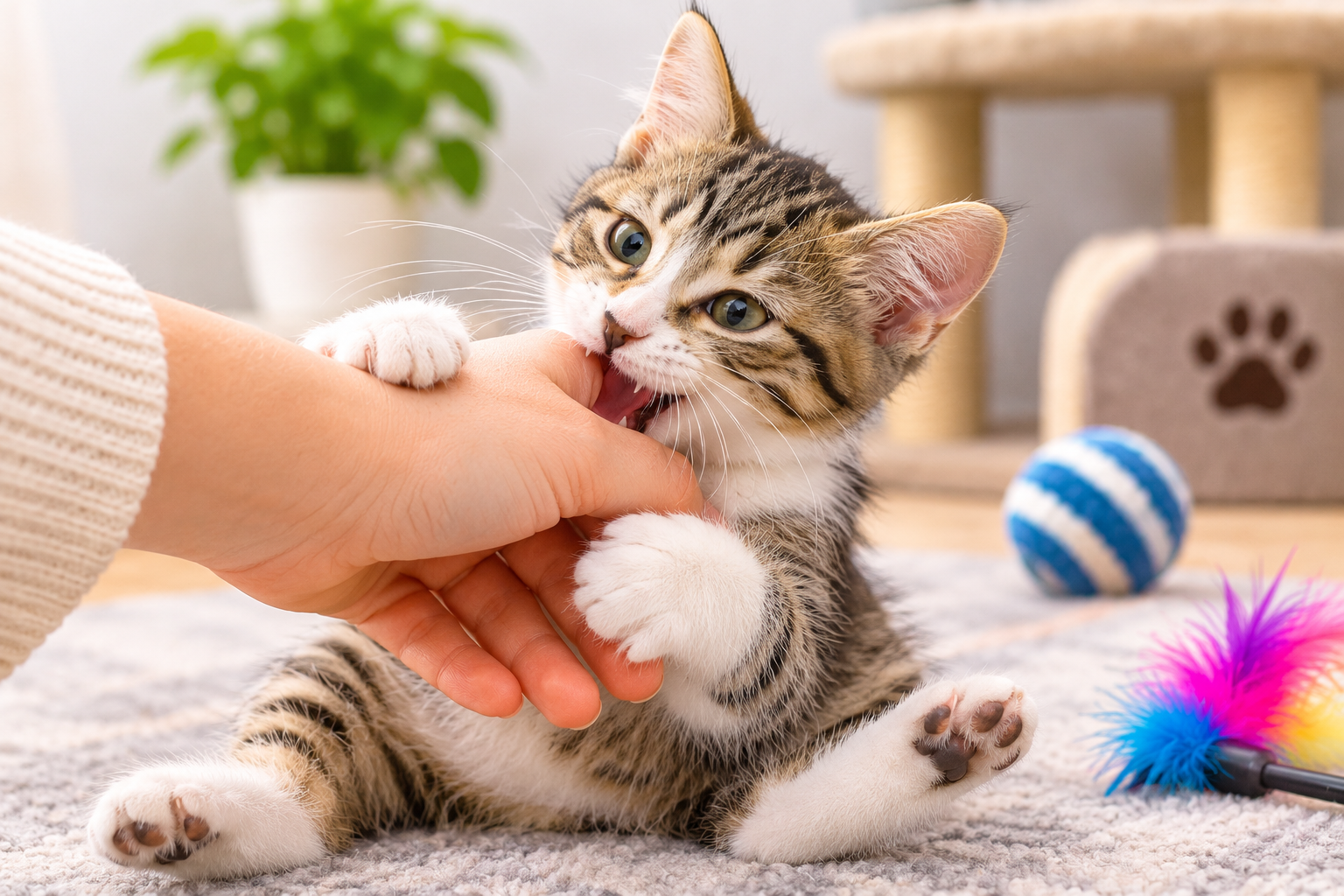




Why Does My Cat Bite My Hands During Play? How to Tell Play Biting from Aggression
Why Does My Cat Bite My Hands During Play? How to Tell Play Biting from Aggression
Does your cat chase your hands, grab your fingers with its teeth, or scratch you with its paws during play? This behavior is common, especially in kittens, but it does not always mean your cat is aggressive. It may be related to hunting instincts, excitement, fear, or discomfort.
Cats often bite their owners' hands during play because of their natural hunting instincts or because they learned to play with hands as kittens. However, sudden biting or biting accompanied by pain or signs of fear may indicate an underlying problem.
In this guide from Super Pet, we explain why cats bite during play, how to recognize the difference between play biting and defensive behavior, and how to reduce biting and scratching safely at home.
Why Does My Cat Bite My Hands During Play?
There are several possible reasons for this behavior.
1. Natural Hunting Instincts
Cats are natural hunters, even when they live indoors and receive all their food from their owners.
During play, a cat may chase your hand, pounce on it, grab it with its teeth, or kick with its back legs. These movements resemble some of the actions cats use when pursuing prey.
What to do: Use cat-safe toys, such as feather wands, balls, and interactive toys, instead of using your hands or feet as play objects.
2. Learning to Play with Hands as a Kitten
If you regularly played with your kitten using your fingers or feet, it may have learned that biting and scratching are acceptable parts of play.
Even if the bites were gentle at first, they may become stronger as the cat grows or becomes more excited.
What to do: Stop playing directly with your hands and redirect your cat to an appropriate toy. Make sure everyone in the household follows the same rules.
3. Overstimulation During Play
Some cats become highly excited during play and begin biting or scratching when their excitement increases.
You may notice faster movements, sudden pouncing, or stronger bites as the play session continues.
What to do: Keep play sessions short and regular. Calmly stop the interaction if your cat becomes overly excited or begins biting harder.
4. Wanting the Interaction to Stop
Not every bite is related to hunting behavior. Sometimes a cat has had enough play or no longer wants to be touched.
Possible signs of discomfort include:
- Rapid or forceful tail movements.
- Ears turned backward.
- A tense body or attempts to move away.
- Suddenly stopping interaction.
- Hissing or trying to escape.
If you notice these signals, give your cat space and stop interacting rather than trying to continue the play session.
5. Boredom and Lack of Activity
Cats that do not have enough opportunities for play and exercise may redirect their energy toward chasing hands or feet.
Provide a variety of suitable toys, safe climbing spaces, and regular play sessions that allow your cat to express its natural hunting behaviors appropriately.
How Can You Tell the Difference Between Play Biting and Aggression?
Play biting often occurs during chasing, pouncing, and interaction. Your cat may return to play after a short pause. Biting associated with fear or defensive behavior may involve visible tension, attempts to escape, or hissing.
Signs of playSigns of fear or defensive behavior
Chasing and pouncing on toysTrying to escape or hide
Pausing and returning to playA tense body or defensive posture
Engaging with a toyHissing, growling, or flattened ears
Biting during active playBiting when approached or touched in a frightening situation
These are general clues, not fixed rules. Feline body language depends on the situation, and no single sign can identify the cause in every case.
Important: If biting starts suddenly when you touch a particular area, or if your cat shows a noticeable behavioral change, consult a veterinarian to rule out pain or an underlying medical problem.
How to Teach Your Cat to Stop Biting Your Hands
Follow these steps consistently to encourage safer play:
- Do not use your hands as toys. Use toys designed for cats instead.
- Stop the interaction when biting occurs. Calmly withdraw your hand without sudden movements and briefly end the play session.
- Redirect your cat to an appropriate toy. Try a feather wand or another toy your cat can chase and grab.
- Reward appropriate play. Use suitable treats or praise when your cat plays with toys without biting your hands.
- Provide regular playtime. Short, frequent sessions can help reduce boredom and give your cat an appropriate outlet for its energy.
- Avoid shouting or punishment. Hitting or shouting may increase fear and stress rather than teach the behavior you want.
- Make sure everyone follows the same rules. Consistency helps your cat learn that hands are not toys.
Changing a learned behavior takes patience and consistency, particularly when a cat has been playing with hands since kittenhood.
Are Cat Bites Dangerous to Humans?
Yes. Cat bites can cause infections because their narrow teeth may introduce bacteria deep beneath the skin, even when the wound looks small.
If a cat bite breaks the skin:
- Wash the wound immediately with running water and soap.
- Seek prompt medical assessment, especially if the bite is on the hand, fingers, or near a joint.
- Do not ignore swelling, redness, increasing pain, or discharge.
- A healthcare professional should assess rabies exposure based on the cat's vaccination status and the circumstances of the bite, as well as whether a tetanus booster is needed.
If the bite punctures the skin, do not wait for signs of infection before seeking medical advice.
When Should You Consult a Veterinarian?
Seek veterinary advice if:
- The biting begins suddenly without an obvious reason.
- Your cat appears painful when touched or protects a particular area.
- The behavior becomes more frequent or difficult to manage.
- Biting is accompanied by severe fear or other behavioral changes.
- Your cat bites itself or excessively licks a particular area.
- Other signs appear, such as lethargy, reduced appetite, or changes in movement.
A veterinary examination can help rule out medical causes and determine whether a behavior-modification plan is needed.
Frequently Asked Questions About Cat Biting During Play
Why does my cat bite my hands without seeming angry?
Your cat may be treating your hands like prey or toys, particularly if it learned to play directly with hands as a kitten. However, watch your cat's body language to make sure it is not stressed or uncomfortable.
Should I allow my cat to bite my hands gently?
It is best not to encourage hand biting, even when it seems gentle. Your cat may bite harder when excited, and it may become difficult to distinguish acceptable play from unwanted biting.
Does a cat biting during play mean it does not love its owner?
No. Play biting does not mean your cat dislikes you. The important factors are the context, your cat's body language, and how you respond to the behavior.
What are the best toys to reduce cat biting?
Feather wands, balls, and suitable interactive cat toys can help redirect your cat's attention away from your hands. Choose safe toys appropriate for your cat's size and supervise play when needed.
Why does my cat bite me when I pet it?
Your cat may have had enough petting, may be stressed, or may feel pain in a particular area. If this behavior is new or repeatedly occurs when you touch the same spot, consult a veterinarian.
Do kittens bite more than adult cats?
Kittens often use biting and chasing as part of play and learning. Teaching them early that hands are not toys and providing appropriate play alternatives can help them develop better habits as they grow.
Conclusion
Cat biting during play is common and is often linked to hunting instincts, excitement, or learned play habits. The best approach is to avoid hand-based play, provide appropriate toys, calmly stop interactions when biting occurs, and avoid punishment.
If biting begins suddenly or is accompanied by pain, severe fear, or noticeable behavioral changes, a veterinary examination is important to rule out medical causes.
Veterinary Review
This article provides general information about feline behavior and care. It does not replace a veterinary examination when concerning symptoms are present.
Super Pet — supporting your pet's health and comfort through veterinary information and suitable care products for cats and dogs